One button. Zero mercy. Pure timing.
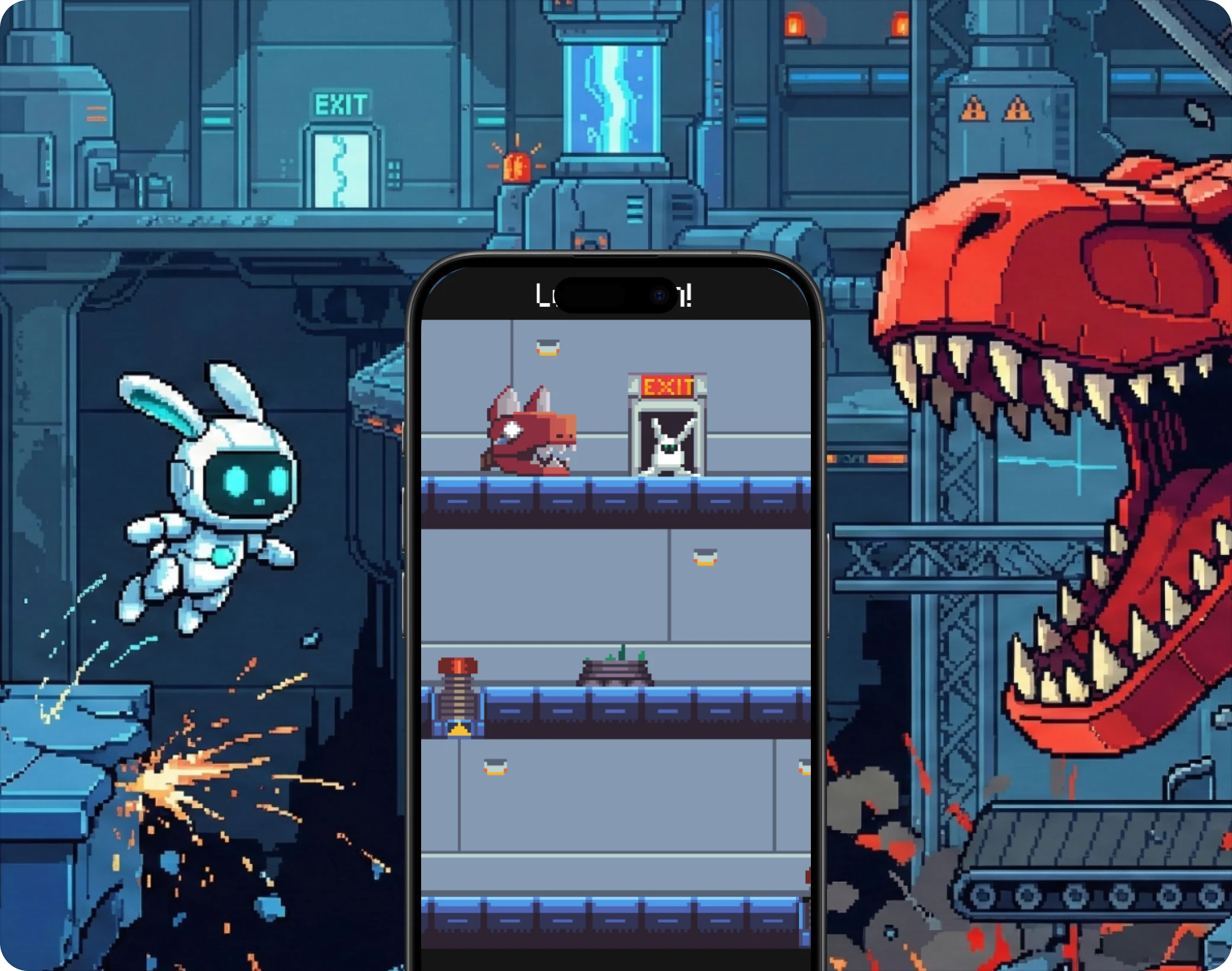
Bunny Escape is a fast mobile game in which players escape dangerous environments. It focuses on quick reactions, simple controls and challenging levels, and it was designed, built and released end to end by the Neural team.
Creating a game that feels intuitive from the very first tap
The main challenge was creating a game that feels intuitive from the first interaction while still offering depth and increasing difficulty through gameplay. With only one primary input, every mechanic, enemy, backdrop and level layout needed to reinforce learning through play, without relying on heavy tutorials or text.
The product also had to work as a complete cross-platform release: performance on a range of devices, a monetization setup that did not break the experience, and a visual style readable at speed on small screens.
Cross-platform build, testing and release
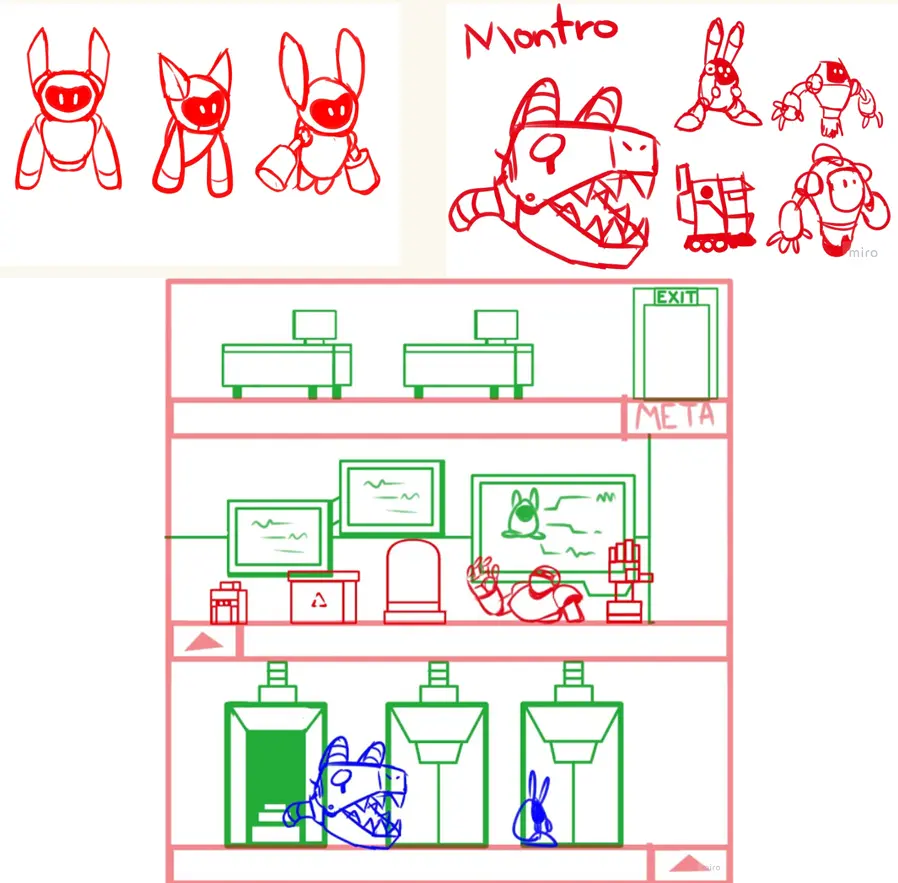
The team treated Bunny Escape as a product, not only as a game. Discovery defined the core loop, the target platforms and the constraints of a single-input control scheme. Interactive prototypes tested whether players understood mechanics without instructions, and the visual style was chosen for readability during fast gameplay: pixel-art environments with high contrast and clear silhouettes, with animations designed to communicate danger, success and failure states.
Levels were structured to teach mechanics implicitly, so players learn by doing. Enemy behavior and level design carry the difficulty curve; visual cues replace textual instructions.
What the team delivered
- Reaction-based movement, enemy avoidance and pattern recognition as the main mechanics
- Environmental interactions and increasing difficulty through enemy behavior and level design
- A game loop and an economy and rewards system designed to sustain engagement across sessions
- Cross-platform implementation in Godot for Android and iOS
- Performance tuning, device testing and iteration on pacing based on playtesting
- Monetization integration with Google Ads and store release

A closer look at the game
Main Mechanics
Key mechanics include:
- Reaction-based movement
- Enemy avoidance and pattern recognition
- Environmental interactions
- Increasing difficulty through enemy behavior and level design
- Visual cues instead of textual instructions
Levels are structured to teach mechanics implicitly, allowing players to learn by doing.
Core Gameplay
Bunny Escape uses a one-button interaction model, playable on mobile.
- Tap to move and interact
- Double tap to perform secondary actions
- Hold or repeated taps trigger specific mechanics depending on the level
The simplicity of the controls allows players to focus entirely on timing, positioning and avoiding enemies.
Game Loop
The core loop was intentionally designed to be short and engaging:
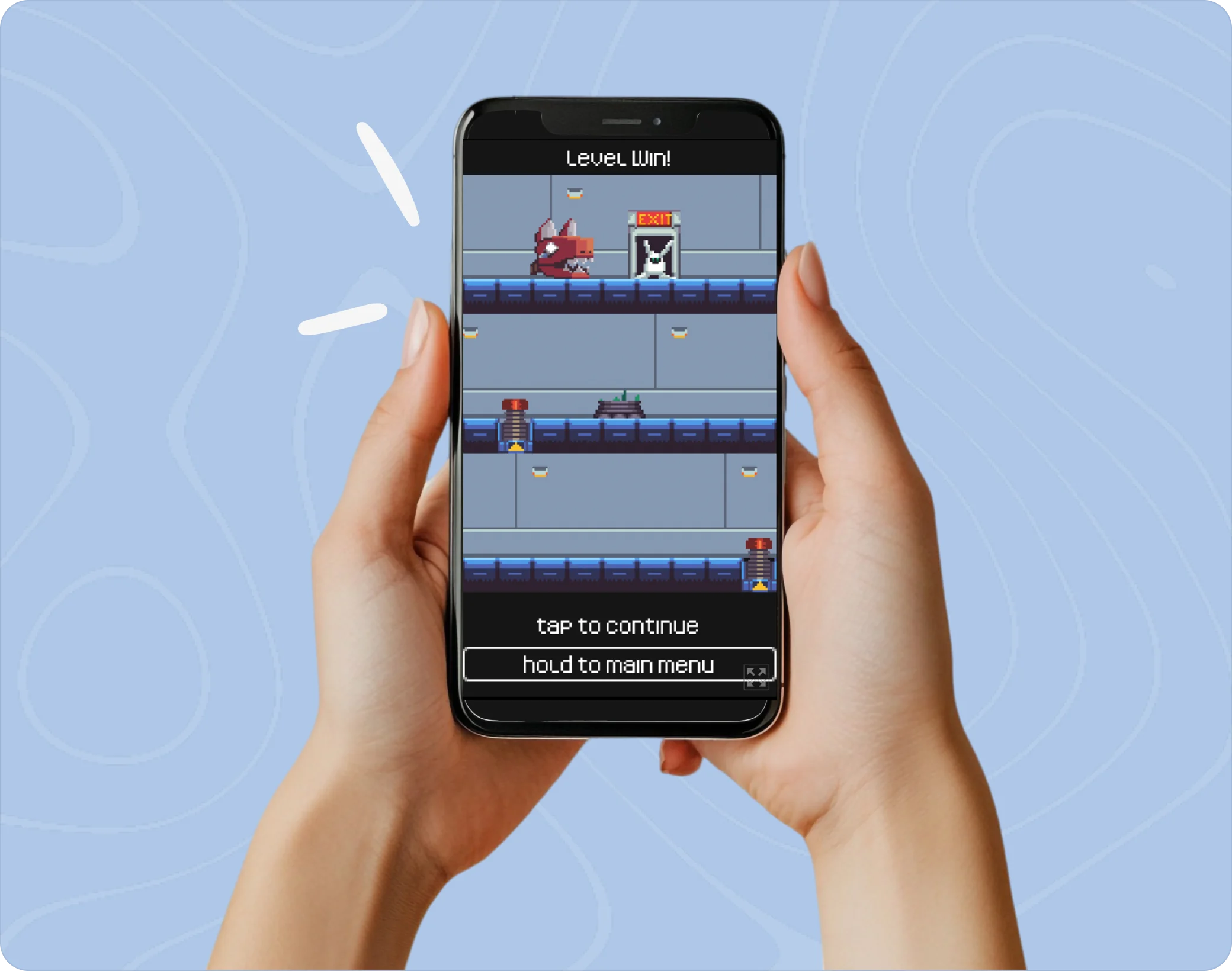
- The player starts a level and navigates toward the exit
- Enemies and obstacles challenge timing and movement
- Getting caught resets the level instantly
- Completing a level rewards progress and coins
- Players retry, improve and advance to harder levels
This loop encourages experimentation, mastery and replayability.
Economy & Rewards
Bunny Escape includes a lightweight in-game economy designed to reward progression without disrupting gameplay:
- Coins are earned by completing levels
- Coins can be used to unlock cosmetic skins
- Skins are purely visual and do not affect gameplay balance
Monetization is implemented through non-intrusive in-game ads (Google Ads), allowing players to earn rewards while keeping the experience fair and skill-based.
Simple mechanics, high-retention gameplay
Bunny Escape was built as a complete, playable game experience that demonstrates how simple mechanics, when carefully designed and iterated, can create engaging and high-retention gameplay.
The game received positive feedback from players, validating the core design decisions around single-button control, difficulty pacing and visual style.
Feedback. Positive feedback from players validated the single-button control, the difficulty pacing and the visual style.
Capabilities
Process
Iterative delivery with playtesting between releases: define the core loop, prototype, test with players, tune difficulty and visuals, release and iterate.
AI role
AI functionality was not part of the product scope. The engagement followed Neural's standard product and engineering practices.