GnuCash Desktop Accounting → React + .NET 8 + PostgreSQL
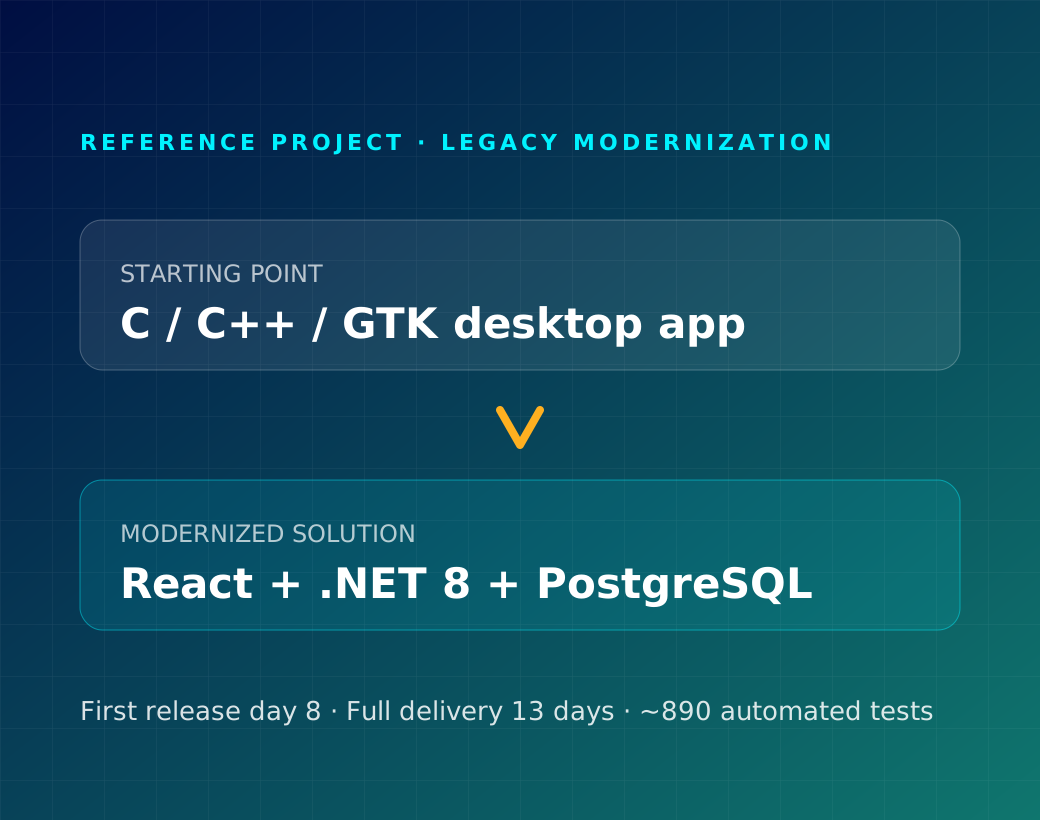
A C/C++/GTK desktop accounting application with a 24-table legacy schema and no multi-user permission model, rebuilt as a multi-user React, .NET 8 and PostgreSQL web application with a reconciled general ledger. First production release on day 8, full delivery in 13 days, approximately 890 automated tests.
This open-source legacy application was migrated by the Neural team as a reference project using the same engineering practices, tooling and acceptance criteria applied to client engagements.
Desktop accounting with no multi-user model
GnuCash is a C, C++ and GTK desktop accounting application built around a 24-table legacy schema and a desktop-focused architecture, with no multi-user permission model. Moving it to the web meant more than a new interface: the data model, the ledger logic and the access model all had to be rebuilt for several users working at once.
The objective was a multi-user web application with a reconciled general ledger, delivered with the evidence needed to trust the migrated financial data.
A reconciled, multi-user accounting web application
The team mapped the 24-table schema, the dependency graph and the security posture, then designed a target architecture and a permission model before implementation. Data migration was treated as a first-class deliverable, with ETL evidence and reconciliation of the general ledger against the source.
The three reference migrations were executed in parallel between September 21 and October 3, 2026, with approximately 70 logged engineering hours combined, following one shared process.
What the team delivered
- React front end for the accounting workflows
- Backend services on .NET 8
- Legacy 24-table schema migrated to PostgreSQL with migration evidence
- Multi-user permission model that the desktop application did not have
- Reconciled general ledger validated against the source data
- Approximately 890 automated tests
- Runbook, rollback triggers, monitoring and operations documentation
How the migration was run
Shared modernization process
The three reference migrations were executed in parallel between September 21 and October 3, 2026, with approximately 70 logged engineering hours combined, following one shared process.
01 · Scan and map
Dependency graph, data model, security posture and risk register built from the legacy code base before any decision is made.
02 · Design and plan
Target architecture, written design decisions and a task-level implementation plan reviewed by the engineers who own delivery.
03 · Build with evidence
Code, tests, infrastructure, documentation, migration or ETL evidence and reconciliation produced together, so every increment can be verified.
04 · Cut over and hand over
Runbook, rollback triggers, monitoring, operations documentation and a credentials package delivered with the release.
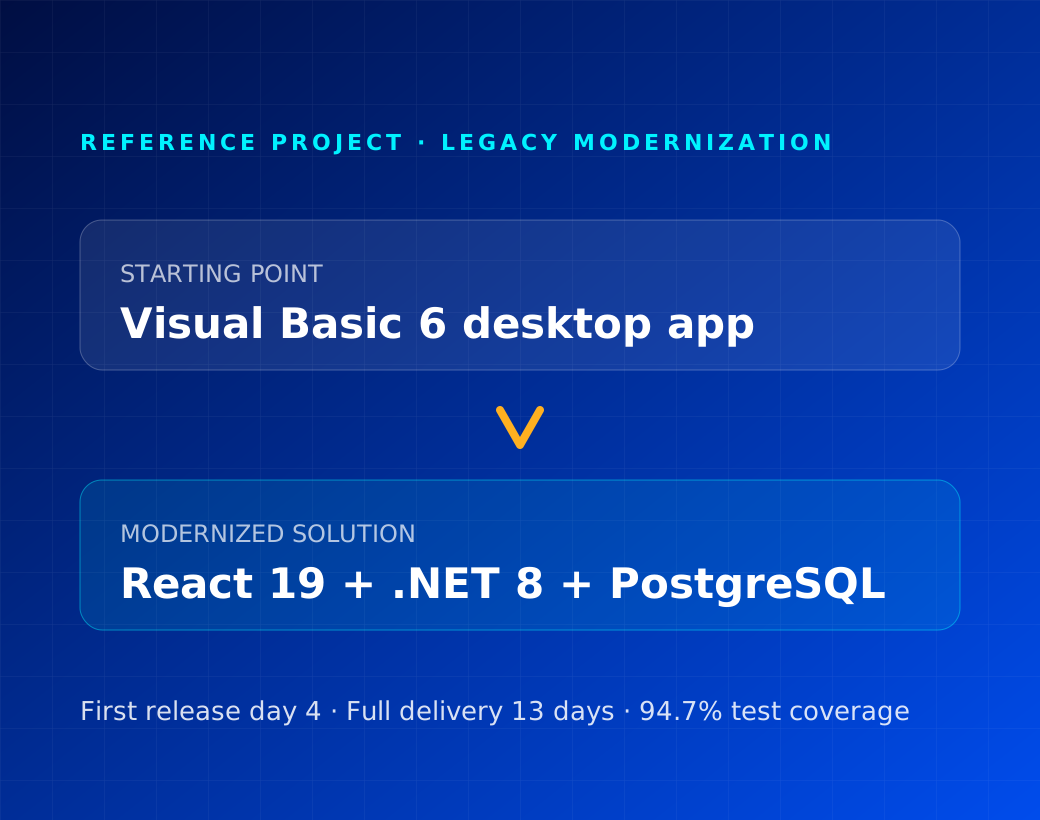
From a GTK desktop to a multi-user web application
Data and database modernization was as important as the new interface.
Starting point
- C / C++ / GTK desktop accounting application
- 24-table legacy schema
- Desktop-focused architecture
- No multi-user permission model
Modernized solution
- React
- .NET 8
- PostgreSQL
- Multi-user web application
- Reconciled general ledger
AI-enabled, human-led delivery
AI-enabled, human-led delivery: experienced engineers led the migration, AI coding agents supported reading the legacy code, drafting, generation and documentation, and the engineers retained ownership of architecture, security, validation and every important delivery decision.
Lead engineers
OwnershipOwn architecture, security, validation and delivery decisions throughout the migration.
AI coding agents
SupportSupport reading the legacy code base, drafting, generation and documentation under engineer review.
QA and reconciliation
EvidenceAutomated tests, migration evidence and reconciliation checks before each release.
Multi-user accounting on a modern stack, with the ledger reconciled
The first production release went live on day 8 and full delivery was completed in 13 days, backed by approximately 890 automated tests and a reconciled general ledger.
Day 8
First production release.
13 days
Full delivery.
~890
Automated tests.
Capabilities
Process
Scan and map, design and plan, build with evidence, cut over and hand over, with reconciliation of the general ledger as the central acceptance criterion.
AI role
AI-enabled, human-led delivery: experienced engineers led the migration, AI coding agents supported reading the legacy code, drafting, generation and documentation, and the engineers retained ownership of architecture, security, validation and every important delivery decision.