Reimagining how pet owners connect, without intermediaries
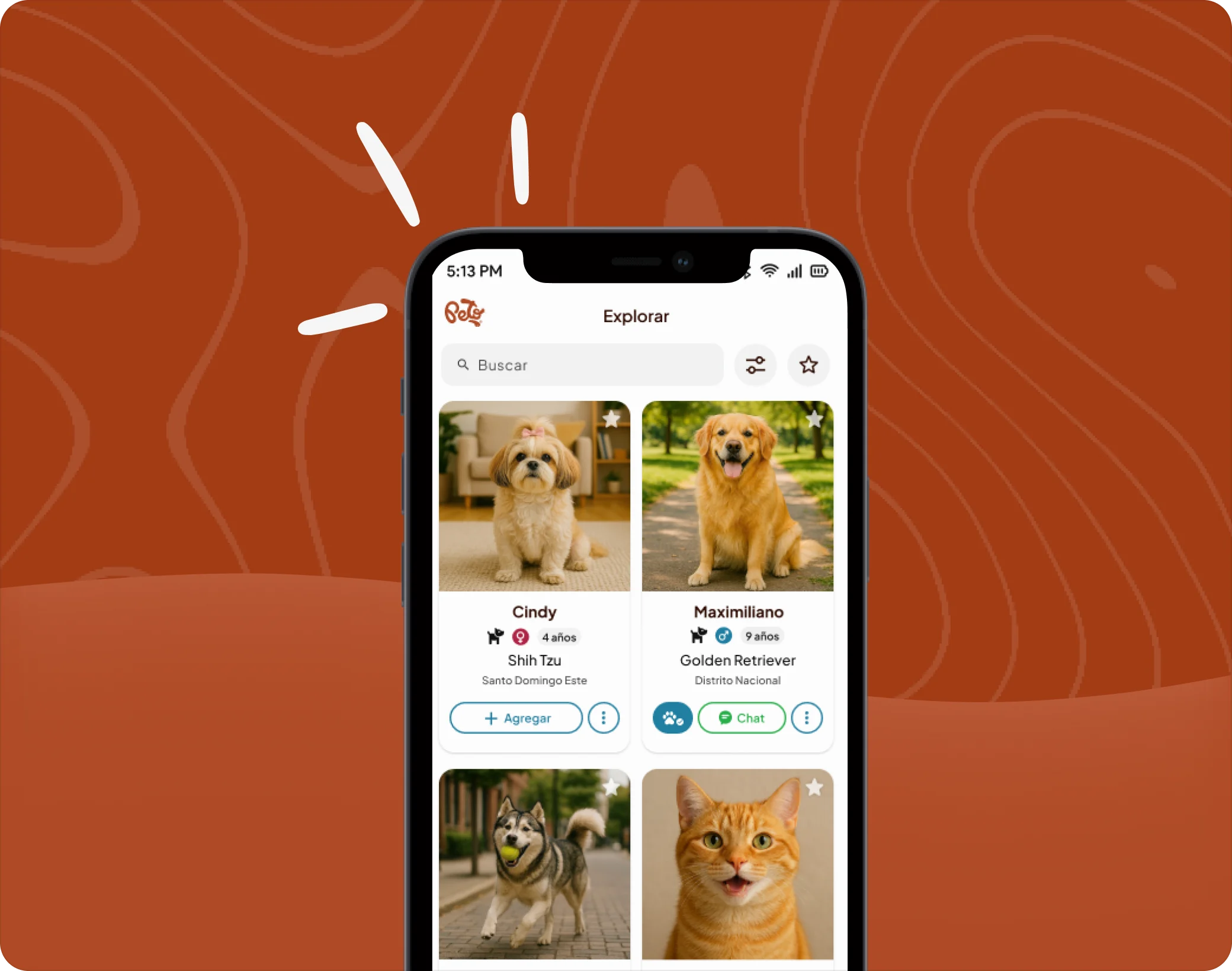
Peto is a mobile product that reimagines how pet owners connect and interact, with pet profiles and breeding information built from user-generated data. Neural designed and built it from alpha to public release.
Pet owners lack a direct, trustworthy way to connect
Pet owners have no direct, transparent way to connect with others around breeding and pet information. Most interactions depend on intermediaries, fragmented data and informal channels that increase costs and reduce trust.
Peto set out to challenge this model by removing intermediaries and enabling a user-driven platform where data, discovery and interaction are owned by the community itself.
Three phases from alpha to launch
Designing Peto required mapping user journeys across discovery, profile creation, social interaction and communication. The process focused on ensuring that every interaction felt intuitive while supporting a user-driven data model.
Mapping these flows early allowed the team to identify edge cases, reduce friction and design a scalable experience without sacrificing usability or simplicity.
-
Phase 1. Initial build and alpha/beta development
This initial phase of Peto focused on defining requirements to establish the foundation of the app, with continuous sprint execution and a clear alpha-to-beta transition.
Key outcomes:
- Core platform development
- Ionic to Flutter migration
- Foundational architecture and UI migration
- Establishment of sprint cadence
- Beta feature expansion and iterative product enhancements
- Final beta iteration and preparation for milestones beyond the initial roadmap
-
Phase 2. Feature delivery and stabilization
A strong execution phase, clearly aligned with launch and beta completion.
Key outcomes:
- Core UX and UI enhancements: notifications screen, app bars and bottom navigation, improved empty-state messaging
- Explore and discovery: advanced filters (design and implementation), improved no-results and no-favorites experiences
- Social and interaction features: friendship requests with multi-selection, chat modals and dialogs, action buttons on profile cards
- Platform polishing: visual fixes, brand and logo updates, backend and frontend integration tasks
-
Phase 3. Beta hardening and remaining work
Final stabilization and beta hardening focused on reliability, polish and release readiness.
Key outcomes:
- Bug fixing
- Azure B2C adjustments
- Performance and refresh issues
- Small UX consistency fixes
A closer look at the platform
Project Methodologies
Peto was developed using an iterative delivery model that allowed the team to quickly test ideas, refine interactions and evolve the product as the concept matured.
The team started with timeboxed Agile sprints and later transitioned to a Scrumban approach to support continuous refinement and long-term product evolution.
Agile Scrum
Methodology used for project management
PlanIT Poker
Tool used for voting during refinements
Visual Studio
Tool used for coding and debugging
Android and iOS
Target mobile platforms
Figma
Tool used for UX design and prototyping
Material
Frontend library used for the user interface
Flutter
Technology and SDK used for the frontend and backend
Scope & Constraints
The project scope was defined to deliver a minimum viable product (MVP) focusing on core features for the first phase.
Scope
- Pet profile creation and social network features
- Adoption and pet matching platform
- Messaging and real-time chat between users
- Location-based pet services discovery
- Push notifications and activity feeds
Constraints
- Cross-platform (iOS and Android) delivery with a single codebase
- Third-party authentication (Google, Apple ID) limitations
- App Store and Play Store review and compliance requirements
- Performance constraints on lower-end mobile devices
Cross-functional Team
A collaborative team of specialists working together to deliver a comprehensive solution.
Product Owner
Vision & StrategyManages the roadmap and backlog, aligns priorities with business goals, and translates needs into requirements.
Backend Developers
ImplementationAPI development and system integrations, hosted on Azure.
Frontend Developers
MobileCrafting user interfaces and experiences for mobile platforms, ensuring seamless functionality and engaging interactions.
UI/UX Designer
Design & ResearchEnd-to-end experience design and prototyping in Figma.
Solution Architect
ArchitectureCrafting scalable architectures, integrating systems and ensuring seamless cloud solutions.
QA (Manual & Automation)
Quality AssuranceValidates core workflows and regression risks through test planning and repeatable checks as the product evolves.
Project Manager
FacilitationCoordinates delivery across disciplines, tracks execution and dependencies, and supports predictable releases.
DevOps Engineer
InfrastructureImplements cloud environments and delivery pipelines, supporting stable deployments and operational readiness.
A fully functional social platform for pet communities
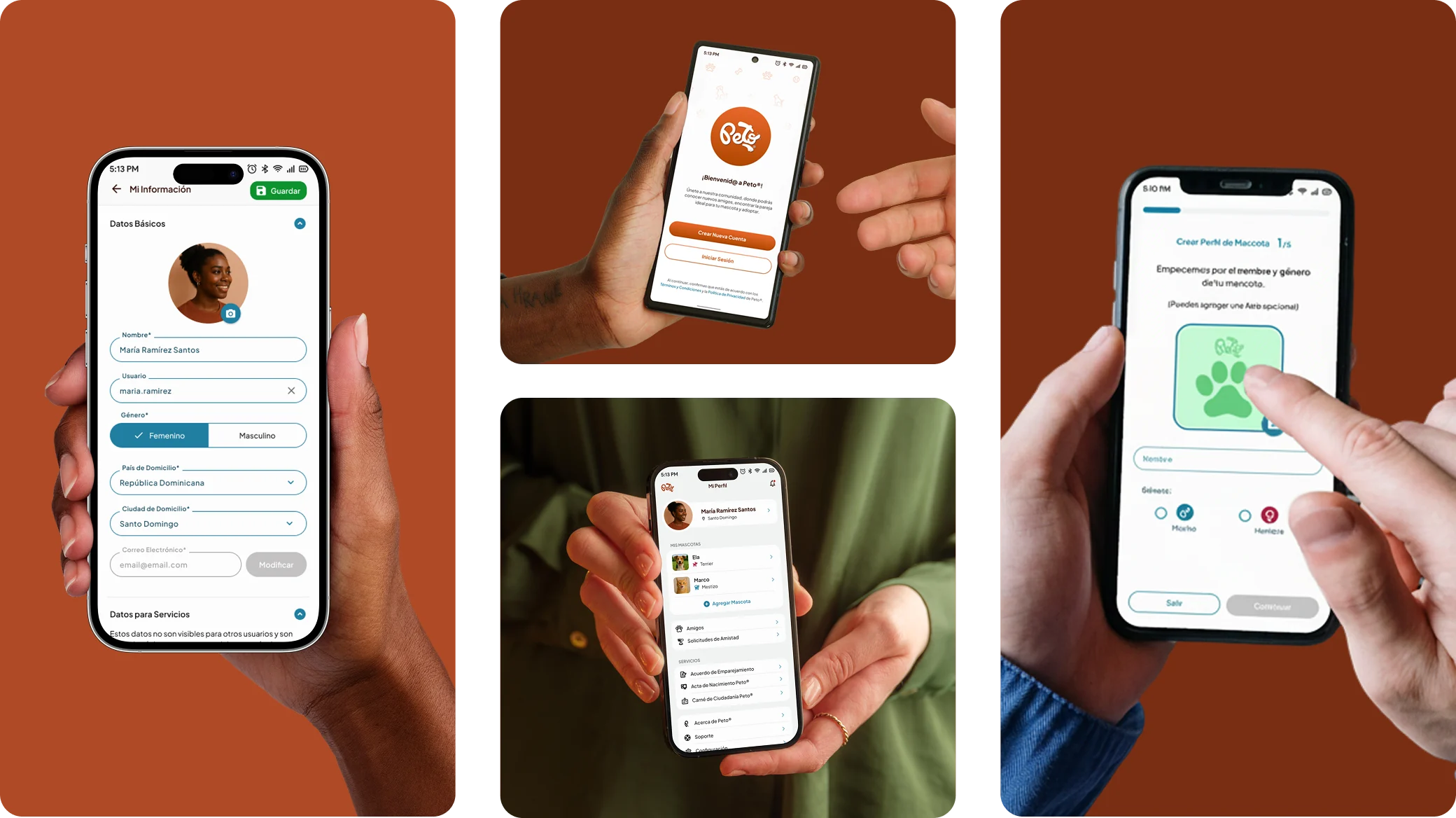
Peto was designed, built and published as a fully functional mobile application, introducing a peer-to-peer model that differs significantly from traditional pet service platforms.
While the product is still early in its lifecycle, it demonstrates how a community-driven approach can enable direct connections, richer profiles and new interaction patterns, laying the groundwork for future growth, validation and iteration.
Key experiences delivered
- Secure user accounts and authentication
- Rich pet profiles with physical, behavioral and breeding details
- Profile discovery and exploration through filters and search
- Social interactions such as connections and chat between users
- User-driven data contributions that power the platform
Capabilities
Process
Iterative delivery that allowed the team to test ideas quickly, refine interactions and evolve the product as the concept matured. Timeboxed Agile Scrum sprints at first, then a Scrumban approach to support continuous refinement and long-term product evolution. Tools: PlanIT Poker for estimation, Figma for UX design and prototyping, Visual Studio for development.
AI role
AI functionality was not part of the product scope. The engagement followed Neural's standard product and engineering practices.