A fast, cost-effective reporting platform designed for scalability
Report Oasis simplifies reporting for organizations that depend on it for day-to-day decisions. It lets teams create and share reports quickly, minimizing setup time and implementation effort. Neural designed and built it as a production-ready SaaS platform.
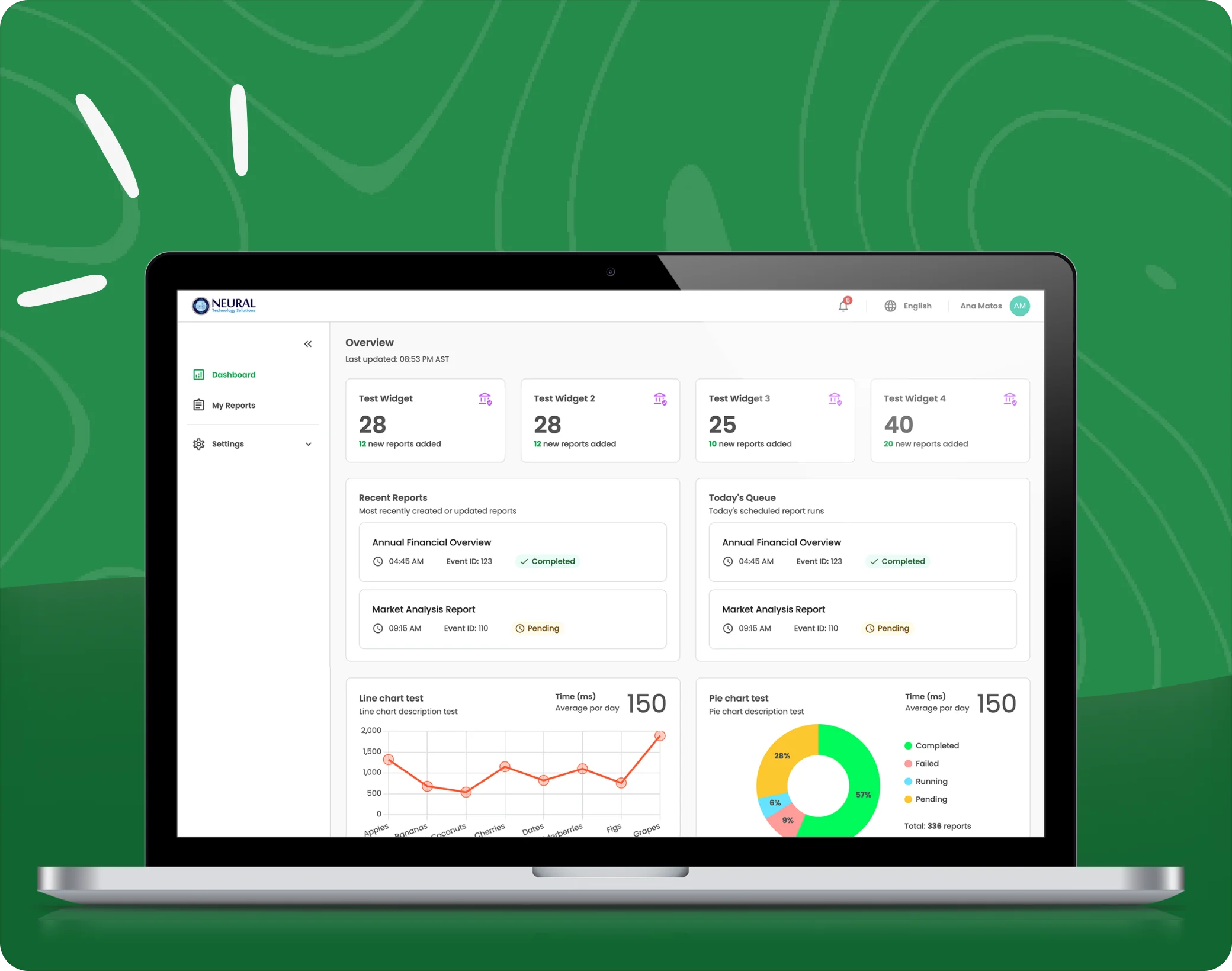
Legacy reporting tools block data-driven decision making
Report Oasis is built for organizations that depend on reporting for day-to-day decision-making but are held back by legacy tools that are expensive, slow to implement and hard to customize.
Traditional reporting solutions often deliver strong capabilities at the cost of complexity: steep learning curves, long development cycles and high operational overhead. Report Oasis addresses this gap with a pre-built, customizable reporting platform designed to shorten time to value, reduce total cost of ownership and improve usability while staying flexible enough for real business workflows.
Three systematic phases from foundation to scale
The team followed a continuous delivery approach focused on validating reporting workflows early, refining usability through iteration and reducing delivery risk as the platform progressed toward real-world production use.
Agile Scrum with two-week sprints, daily stand-ups and retrospectives; story-point estimation with PlanIT Poker; automated builds and deployments through Azure Pipelines; and regular user testing with feedback incorporated into each iteration.
-
Phase 1. Foundation and core reporting
This phase focused on establishing the visual and functional foundation of Report Oasis, delivering the core reporting experience and validating end-to-end workflows.
Key outcomes:
- UI themes and visual refresh for clarity and consistency
- Core reporting workflows (creation, scheduling, exports, notifications)
- Authentication, roles and permission foundations
- Early usability improvements (badges, tutorials, tooltips)
-
Phase 2. Platform maturity and enterprise readiness
With the core experience in place, the platform evolved toward enterprise-grade scalability, maintainability and governance.
Key outcomes:
- Angular modernization and migration to standalone components
- Expanded role-based access control and permission-driven UI visibility
- User management capabilities (active and inactive users, password resets)
- Internationalization (i18n) and localization foundations
- UX refinements based on real usage patterns
-
Phase 3. Production stabilization and post-release evolution (ongoing)
As Report Oasis entered production usage, efforts shifted toward quality, stability and operational excellence.
Key outcomes:
- Release-level quality fixes and API warning resolution
- Localization rollout (including Spanish translations)
- Production bug fixes and platform stabilization
- Post-release QA and continuous usability refinements
A closer look at the platform
Project Methodologies
Report Oasis was developed using a continuous delivery approach focused on validating reporting workflows early, refining usability through iteration and reducing delivery risk as the platform progressed toward real-world production use.
The project followed Agile Scrum methodology to ensure iterative development and continuous feedback integration.
Agile Scrum
2-week sprints with daily stand-ups and retrospectives
PlanIT Poker
Story-point estimation and task prioritization
Continuous Integration
Automated builds and deployments via Azure Pipelines
User-Centered Design
Regular user testing and feedback incorporation
Scope & Constraints
The project scope was defined to deliver a minimum viable product (MVP) focusing on core features for the first phase.
Scope
- Report creation, customization and generation
- Scheduling and notifications
- Multi-source data integration
- Role-based permissions and user management
- Foundations for monitoring and audit logging
Constraints
- Limited backend and DevOps capacity
- Heavy reliance on manual QA
- Security and compliance requirements for enterprise clients
- Authentication and authorization limitations imposed by third-party identity providers
Cross-functional Team
A collaborative team of specialists working together to deliver a comprehensive solution.
Product Owner
Vision & StrategyManages the roadmap and backlog, aligns priorities with business goals, and translates needs into requirements.
Software Developers
ImplementationCreate the reporting platform with frontend, backend, integrations, permissions and workflows.
UI/UX Designer
Design & ResearchDesigns user journeys (templates, data sources, datasets, reports, scheduling) for clarity and usability.
QA (Manual & Automation)
Quality AssuranceValidates core workflows and regression risks through test planning and repeatable checks as the product evolves.
Project Manager
FacilitationCoordinates delivery across disciplines, tracks execution and dependencies, and supports predictable releases.
DevOps Engineer
InfrastructureImplements cloud environments and delivery pipelines, supporting stable deployments and operational readiness.
Production-ready, with a growing cohort of early users
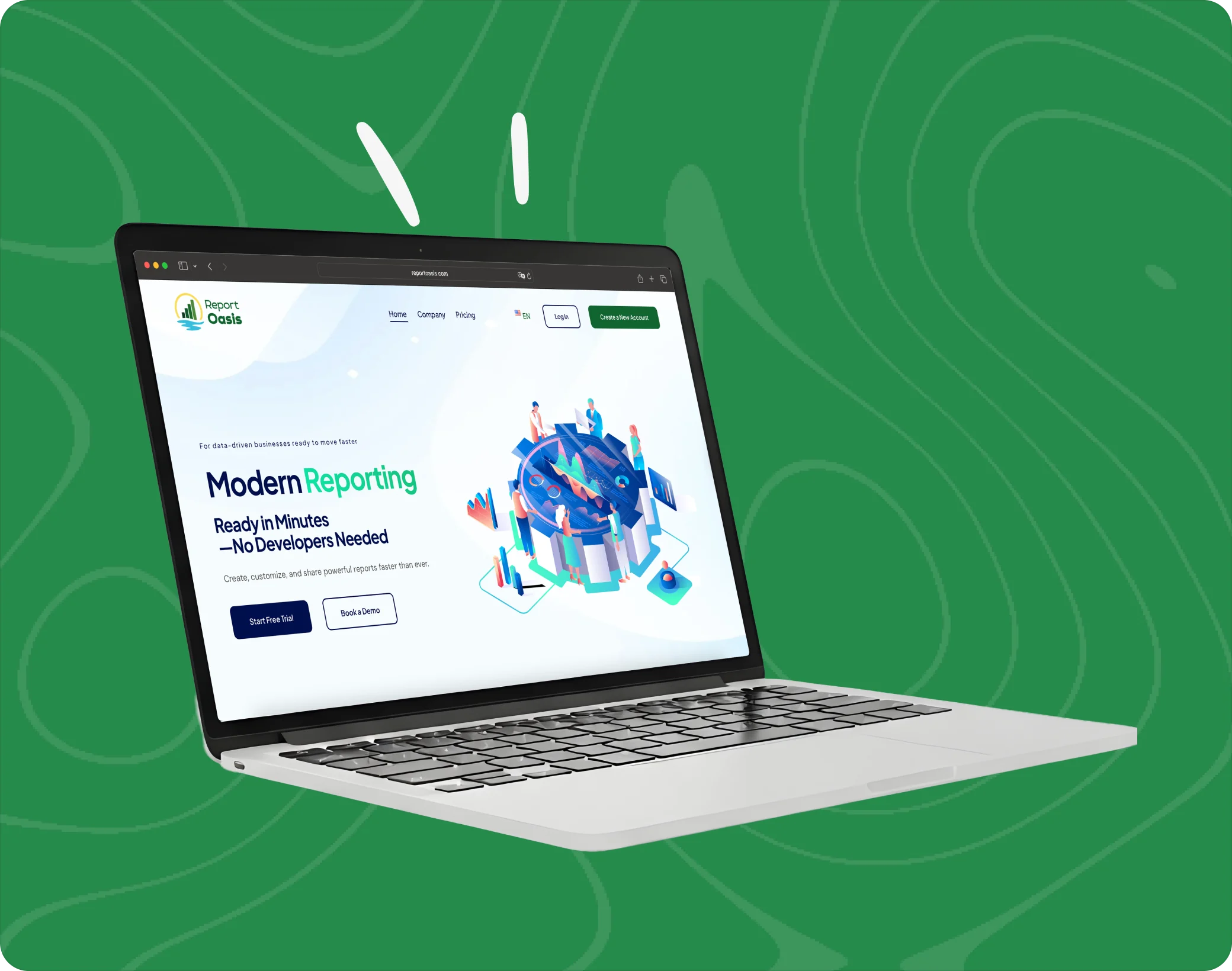
Report Oasis was designed and built as a production-ready reporting platform. The product is now entering real-world usage, with its first client onboarded and beginning to use the platform in production.
This milestone validates the platform's core value proposition: reducing reporting friction while remaining flexible enough to adapt to different business needs.

Capabilities
Process
Agile Scrum: two-week sprints with daily stand-ups and retrospectives, story-point estimation, continuous integration through Azure Pipelines, and user-centered design with regular testing.
AI role
AI functionality was not part of the product scope. The engagement followed Neural's standard product and engineering practices.